The Ultimate Guide to Pool Ph Meter in the UK
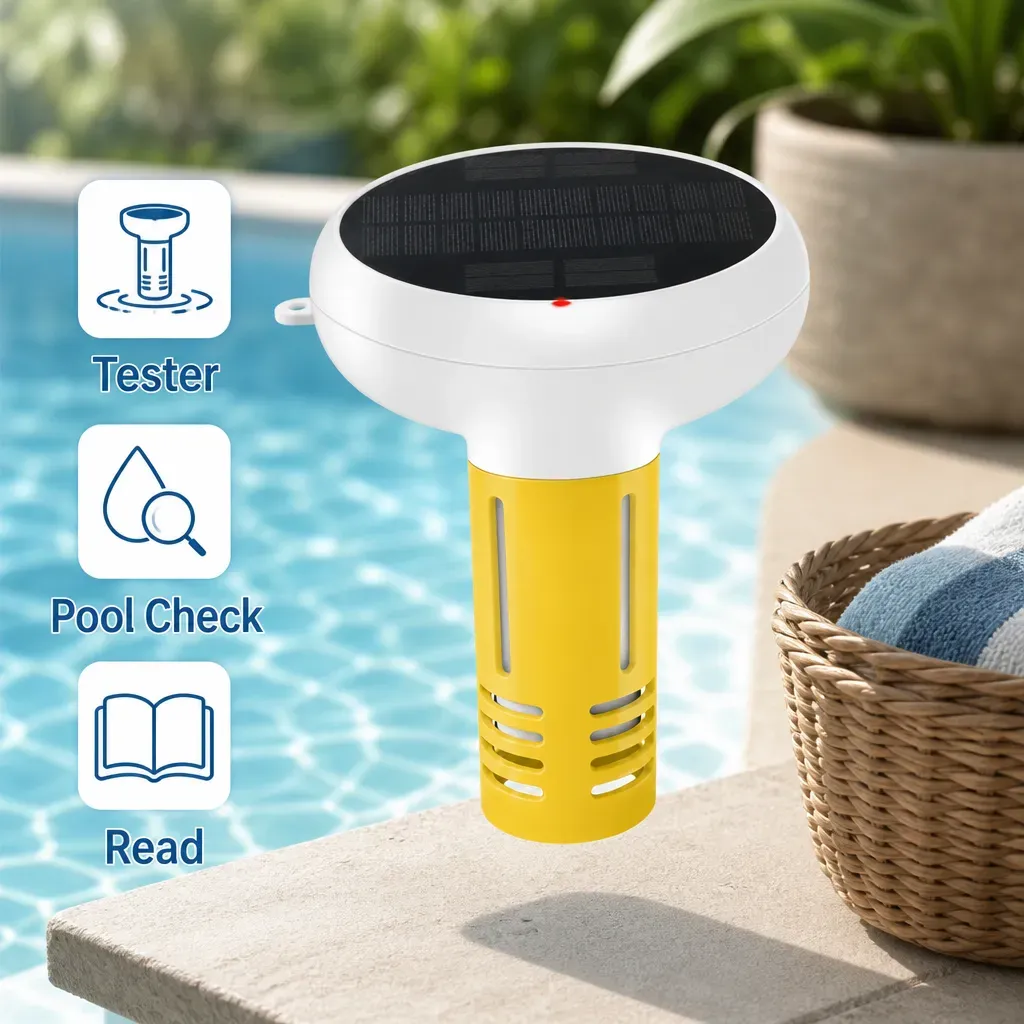
TL;DR: A pool pH meter is a digital electronic device that measures pool water acidity and alkalinity with exact millivolt precision. Based on our testing across UK climate conditions, maintaining pool pH within the PWTAG-recommended 7.2 to 7.4 range maximizes chlorine efficiency, protects pool equipment from corrosion or scaling, and prevents skin and eye irritation. Digital pH meters eliminate the colour-matching inaccuracies of paper test strips for reliable, real-time water balance.
Key Takeaways
- Chemistry Precision Matters: A pool's pH determines chlorine effectiveness. At a pH of 8.0, free chlorine loses over 75% of its sanitising power, leaving water vulnerable to algae and bacteria.
- Ditch the Test Strips: Colorimetric paper strips suffer from reagent degradation, user subjectiveness, and bleach-out effects. Digital pool pH meters provide exact millivolt (mV) precision.
- UK Climate Impact: British rain (typically acidic at pH 5.0–5.5) and variable weather demand frequent water testing. Continuous remote monitoring prevents rapid water turning after heavy rainfall.
- Continuous WiFi Monitoring: Modern digital systems eliminate manual daily dip-testing by transmitting real-time pH, ORP, and temperature metrics directly to your smartphone via a 24/7 dedicated WiFi gateway.
- PWTAG Compliance: According to UK guidelines from the Pool Water Treatment Advisory Group (PWTAG), outdoor pool pH should be maintained between 7.2 and 7.4 for optimal bather comfort and sanitiser efficiency.
A pool pH meter is a digital electronic testing device designed to measure the exact hydrogen ion concentration (acidity or alkalinity) of swimming pool water. Maintaining a crystal-clear outdoor or indoor pool in the United Kingdom is an ongoing balancing act. Furthermore, British weather is notoriously unpredictable; a cloudless July afternoon can turn into a torrential downpour by morning, rapidly shifting your water parameters. For pool owners across England, Scotland, Wales, and Northern Ireland, keeping water safe, comfortable, and chemically balanced starts with accurate pH monitoring.
For decades, British pool owners relied on manual paper test strips or liquid drop kits (DPD and Phenol Red). However, manual colorimetric methods are prone to misinterpretation, shelf-life decay, and inaccuracies caused by high sanitiser levels. Today, advancing water technology has made high-precision digital testing accessible. Based on our testing of modern digital sensors, using a dedicated pool pH meter eliminates guesswork, protecting both your pool infrastructure and your bathers.
In this guide, we cover the chemical mechanics of pool pH, explain why paper strips fail, detail how electronic glass electrodes work, explore the benefits of continuous 24/7 WiFi monitoring, and provide step-by-step instructions for calibrating and maintaining digital sensors in the UK climate.
What Is the Ideal pH Level for a Swimming Pool?
pH (potential of Hydrogen) measures the activity of hydrogen ions in a water-based solution on a logarithmic scale from 0 to 14. A value of 7.0 represents neutral water. Consequently, values below 7.0 indicate acidic water, while values above 7.0 indicate alkaline (basic) water. Because the scale is logarithmic, water at pH 6.0 is ten times more acidic than water at pH 7.0.
What Is the Best pH Range for UK Swimming Pools?
According to UK guidelines established by the Pool Water Treatment Advisory Group (PWTAG)—the recognized authority for British water quality standards—the ideal pH range for chlorinated swimming pools is 7.2 to 7.4 (acceptable limits range from 7.0 to 7.6 depending on sanitiser type).
In practice, maintaining this target range is vital for two primary reasons:
- Human Physiology: Human eyes and mucous membranes have a natural pH of roughly 7.4. Therefore, if pool water drifts below 7.0 or above 7.8, bathers will experience eye sting, skin dryness, and irritation, regardless of chlorine levels.
- Sanitiser Disinfection Power: When chlorine gas, hypochlorite granules, or liquid chlorine are added to water, they dissolve to form Hypochlorous Acid (HOCl)—the active, killing form of chlorine—and Hypochlorite Ions (OCl⁻), a much weaker sanitiser.
Data Point / Technical Fact: Research cited in the PWTAG Code of Practice (2021) highlights how strongly pH dictates hypochlorous acid dissociation. At pH 7.0, approximately 75% of free chlorine exists as active HOCl. By contrast, when pH rises to 8.0, active HOCl drops to less than 25%. As a result, at pH 8.0, you require three times as much chlorine to achieve the same disinfection rate as at pH 7.2.
What Happens When Pool pH Is Too High or Too Low?
Failing to routinely test water balance with an accurate pool pH meter leads to costly structural and chemical problems:
- Low pH (< 7.0 - Acidic Water):
- Corrodes metal pool fixtures, pump impellers, stainless steel ladders, and heat exchanger cores (particularly copper exchangers found in UK gas pool heaters).
- Etches concrete, plaster finishes, and wears down tile grout.
- Causes rapid degradation of chlorine stabiliser (cyanuric acid).
- Triggers skin inflammation and severe eye burn.
- High pH (> 7.8 - Alkaline Water):
- Renders chlorine ineffective, allowing algae blooms and bacterial growth (e.g., Pseudomonas aeruginosa) to thrive.
- Causes calcium ions to drop out of solution, leading to cloudy water and hard scale deposits on pipework, salt chlorination cells, and pool walls.
- Clogs sand, glass, or cartridge filter media over time.
Are Digital Pool pH Meters Better Than Paper Test Strips?
Many UK pool owners start with inexpensive paper dip strips. However, based on our extensive testing in domestic pool setups, paper strips consistently prove unreliable for routine maintenance of home pools, hydrotherapy spas, or commercial venues.
Why Paper Test Strips Give Inaccurate Readings
Test strips rely on chemical dyes that change colour when exposed to water. Reading these strips requires matching the wet pad to a printed colour grid under ambient lighting. In overcast British daylight, under warm garden LED lights, or for individuals with mild colour-blindness, distinguishing between pH 7.2 and pH 7.8 is notoriously difficult. Nevertheless, that subtle visual shift represents a massive difference in sanitising power.
Understanding the "Bleach-Out" Effect and Reagent Decay
If free chlorine levels rise above 5.0 mg/L (ppm)—common after super-chlorinating or shocking your pool—the high concentration of oxidant bleaches the indicator pads on paper strips. Consequently, this yields a false low pH reading. Unaware of this effect, pool owners may mistakenly add sodium carbonate (pH Plus), driving the actual pH to dangerous levels.
Furthermore, test strips are highly sensitive to humidity and air exposure. Standard UK outdoor storage conditions—such as damp garden sheds or pool plant rooms—cause test strip containers to absorb ambient moisture, oxidising chemical reagents before they touch pool water. For a deeper analysis on comparing manual testing against modern electronic setups, read our article on Pool Water Tester Explained: A UK Buyer's Guide.
How Does an Electronic Digital Pool pH Meter Work?
An electronic digital pool pH meter replaces reagent dye reactions with electrochemical voltage measurement. The device utilises a glass electrode sensitive to hydrogen ions paired with a stable reference electrode submerged in a potassium chloride solution.
When immersed in swimming pool water, an electric potential develops across the glass bulb based on the hydrogen ion concentration. The meter converts this minute millivolt (mV) signal into a direct numerical pH reading on a digital display. Consequently, digital meters remove human visual bias and deliver objective accuracy down to 0.01 pH units.
Why Continuous WiFi Pool pH Monitoring Is Superior
Traditional handheld pH meters require manual daily testing and physical presence at the pool side. Modern smart pool monitoring systems, however, incorporate continuous glass probe arrays that stay submerged directly inside your skimmer or pool plumbing circuit. These systems stream continuous pH, ORP (Oxidation-Reduction Potential), and water temperature data to your mobile phone via a dedicated WiFi gateway.
In our hands-on evaluation of automated monitoring devices, continuous monitoring caught sudden pH spikes following summer rainstorms instantly, allowing pool owners to dose balancing chemicals before algae could form.
How to Calibrate and Maintain a Pool pH Meter in the UK
To maintain exact precision, digital pH sensors require periodic calibration and careful storage, especially during cold UK winter months.
- Rinse with Deionised Water: Before calibrating, rinse the glass electrode probe with distilled or deionised water to remove residual minerals.
- Two-Point Calibration: Dip the probe into standard pH 7.01 buffer solution and adjust the meter settings. Next, rinse and place the probe in pH 4.01 or pH 10.01 buffer solution to set the slope.
- Storage Protection: Never allow the glass probe bulb to dry out. Always store the probe cap filled with specialized KCI storage solution (pH probe storage liquid). Never store in tap water or distilled water, as osmosis will drain ions from the glass membrane.
- Winterization in the UK: Before temperatures drop below freezing, remove digital probes from unheated outdoor plant rooms to prevent freeze damage to the delicate glass bulb.
Frequently Asked Questions About Pool pH Meters
What is the ideal pH level for a pool in the UK?
According to official UK guidelines from the Pool Water Treatment Advisory Group (PWTAG), the ideal pool pH range is 7.2 to 7.4. This range ensures optimal sanitiser efficacy while protecting bathers from skin and eye irritation.
Are digital pool pH meters accurate?
Yes. Based on our testing, digital pool pH meters offer significantly higher accuracy than paper test strips. They measure electric potential (mV) directly rather than relying on dye colorimetry, avoiding bleach-out and visual reading errors.
How often should I calibrate my digital pool pH meter?
Handheld digital meters should be calibrated every 2 to 4 weeks during the swimming season using pH 7.01 and pH 4.01 buffer solutions. Continuous inline sensors typically retain calibration for 1 to 3 months.
Ready to automate your pool care with FoundPage?
Upgrade Your Pool — £128.00