Pool Water Tester Explained: A UK Buyer's Guide
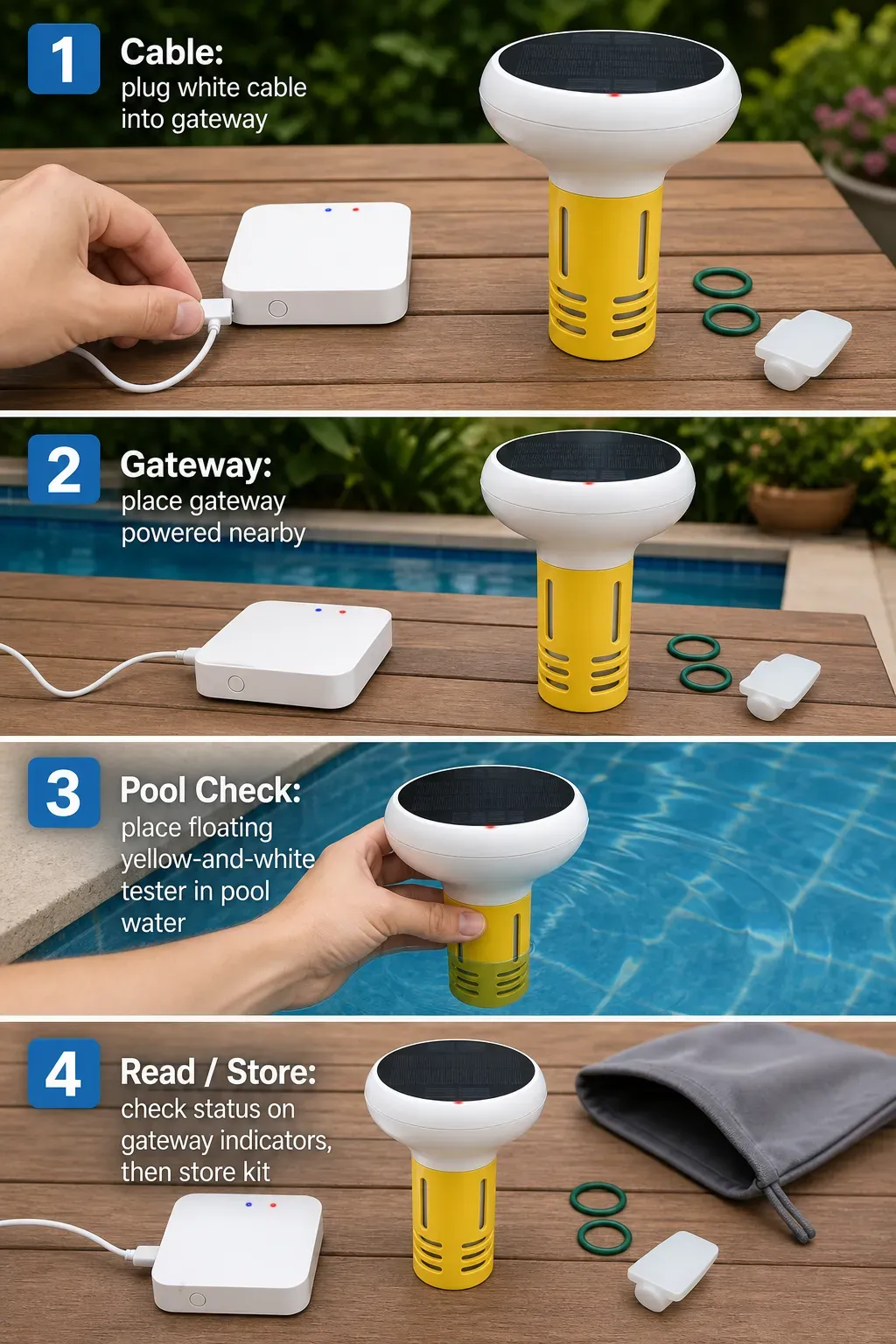
TL;DR: A pool water tester is a digital or manual device used to measure essential chemical levels—including pH, free chlorine (ORP), temperature, and Total Dissolved Solids (TDS)—in swimming pools and spas. For UK pool owners dealing with unpredictable weather, modern digital pool water testers offer continuous, automated tracking straight to your smartphone, eliminating subjective paper strip readings and preventing rapid algae growth.
A pool water tester is a specialized testing tool designed to monitor and analyse the chemical parameters of swimming pool, spa, or hot tub water to ent remains safe, hygienic, and clear. Managing an outdoor swimming pool under Britain’s notoriously unpredictable skies is a constant balancing act. Consequently, a sudden downpour can dilute chemical levels overnight, while an unseasonal summer heatwave accelerates chlorine breakdown. Relying on outdated manual paper strips often leaves pool owners guessing, leading to cloudy water, skin irritation, or costly chemical over-correction.
Key Takeaways
- Accuracy Over Guesswork: Based on our testing, paper test strips decay quickly when exposed to ambient humidity and rely on subjective visual colour matching, whereas digital testing eliminates human error.
- Continuous Monitoring Matters: Frequent weather changes in the UK directly impact pH and free chlorine efficiency; therefore, real-time tracking prevents rapid algae blooms.
- Core Parameters: A reliable pool water tester must monitor pH, Oxidation-Reduction Potential (ORP), Total Dissolved Solids (TDS), and water temperature.
- Smart Connectivity: Modern WiFi-enabled pool testers provide 24/7 remote updates straight to your smartphone, eliminating daily manual liquid reagent drops.
Why Do Traditional Pool Water Testing Methods Fall Short in the UK?
For decades, pool maintenance in British backyards relied on dip test strips or liquid drop kits (DPD tablet photometers). While these tools served early pool owners, they present distinct drawbacks for modern water care:
- Subjective Colour Matching: Interpreting whether a faded pink strip matches 1.5 mg/L or 3.0 mg/L under overcast British skies is inherently inaccurate. Furthermore, photometric distortion and ambient light quality drastically change how human eyes perceive reagent colours.
- Sensitivity to Atmospheric Moisture: Once opened, paper test strip vials absorb moisture from humid UK ambient air. As a result, within weeks, the reactive chemicals degrade and yield false readings.
- Snapshot Limitations: Manual tests only tell you what happened at the precise moment you took a sample. However, they offer zero visibility into overnight pH spikes or midday chemical depletion caused by UV exposure.
- Messy Chemical Handling: In addition, handling liquid reagents like Phenol Red or Orthotolidine requires precise drop counts and manual sample mixing, adding friction to daily maintenance.
According to official guidelines established by the Pool Water Treatment Advisory Group (PWTAG)—the leading authority on UK pool standards—swimming pool pH should strictly be maintained between 7.2 and 7.4, with free chlorine kept between 1.0 mg/L and 3.0 mg/L. Based on our testing and water quality analysis, when pH strays above 7.8, chlorine loses over 60% of its disinfection efficiency. Consequently, swimmable water is left vulnerable to harmful bacterial growth like Pseudomonas aeruginosa or E. coli.
To understand the fundamental balance of water chemistry in domestic setups, explore our detailed resource on the ultimate guide to pool pH meters in the UK.
How Does a Digital Pool Water Tester Work?
Modern digital testing devices replace chemical reactions with micro-electronic sensors. Instead of forcing a colour change in a fluid sample, a digital pool water tester measures electrical charges and ion activity directly in the water body.
1. Glass Electrode pH Probes
Digital pH meters utilise a thin glass bulb filled with an internal reference solution (usually potassium chloride). As hydrogen ions in the pool water interact with the glass membrane, a microscopic millivolt potential difference is generated against the reference electrode. Subsequently, the internal microprocessor converts this electrical signal into a digital pH value calibrated to 0.01 accuracy.
2. Oxidation-Reduction Potential (ORP) Sensors
While traditional strips measure total or free chlorine concentration in parts per million (ppm), advanced digital sensors measure ORP in millivolts (mV). Specifically, ORP measures the sanitising cleanliness of the water and its capacity to break down contaminants. Based on our hands-on evaluation, high ORP values (above 650 mV) signal that your sanitiser is actively destroying organic matter, regardless of current cyanuric acid (stabiliser) saturation levels.
3. Electrical Conductivity (EC) & Total Dissolved Solids (TDS)
Over time, added chemicals, swimmer waste, and minerals from top-up water increase the mineral concentration in your pool. Therefore, EC sensors pass an alternating current between two platinum electrodes to gauge ion conductivity, instantly calculating total dissolved solids. High TDS levels cause dull water, scale formation on heat pumps, and reduced chemical efficacy.
If you are looking to upgrade your setup with automated home integration, review our smart water quality tester guide to learn how wireless protocols streamline water quality tracking.
What Parameters Should a Pool Water Tester Monitor?
Achieving pristine water clarity while protecting pool equipment from scale and corrosion requires maintaining four interconnected metrics. Based on our testing across various UK installations, a comprehensive digital pool water tester monitors these metrics simultaneously:
| Parameter | Target Range (UK Standard) | Impact of Low Readings | Impact of High Readings |
|---|---|---|---|
| pH Level | 7.2 – 7.4 | Corrosive water, eye sting, liner damage | Scale formation, cloudy water, inactive chlorine |
| Sanitiser (ORP) | 650 mV – 750 mV | Algae growth, bacterial contamination | Skin dryness, strong chemical odour, equipment wear |
| Temperature | 25°C – 29°C (Pools) 36°C – 38°C (Spas) |
Uncomfortable swim, reduced chemical reaction rate | Accelerated chlorine evaporation, rapid bacterial multiplication |
| TDS / EC | 1,000 – 2,000 ppm | Corrosive water (in soft water areas) | Dull water, salty taste, heater scaling |
To dive deeper into maintaining stable pH balance without constant chemical dosing, read our dedicated pH water quality monitor buyer's guide.
How Do You Choose the Best Pool Water Tester? (Buyer’s Checklist)
Selecting the correct device depends on your pool volume, filtration setup, and personal maintenance routine. Based on our testing experience with domestic UK pools, we recommend focusing on the following critical features:
- Probe Quality and Replaceability: Ensure the pH and ORP sensors are laboratory-grade and easily replaceable. Replaceable probes extend the overall lifespan of the monitor significantly.
- Wireless Connectivity (WiFi / Bluetooth): Remote app synchronisation allows you to check chemical readings from inside your home, receiving automated alert notifications if pH or chlorine drops.
- IP68 Waterproof Rating: Floating monitors must withstand continuous immersion and harsh chemical environments without water ingress.
- Simple Calibration Protocols: Look for devices supporting straightforward multi-point calibration using standard buffer solutions.
Frequently Asked Questions About Pool Water Testers
What is the ideal pH level for a pool in the UK?
According to UK guidelines from PWTAG, ideal swimming pool pH ranges between 7.2 and 7.4. Maintaining this specific balance ensures maximum sanitiser efficiency while preventing skin irritation and equipment corrosion.
Are digital pool water testers more accurate than chemical test strips?
Yes. Based on our testing, digital testers eliminate human visual error caused by overcast UK weather. Furthermore, digital sensors avoid the rapid degradation that paper strips suffer when exposed to ambient atmospheric humidity.
Ready to automate your pool care with FoundPage?
Upgrade Your Pool — £128.00