Ph Water Quality Monitor Explained: A UK Buyer's Guide
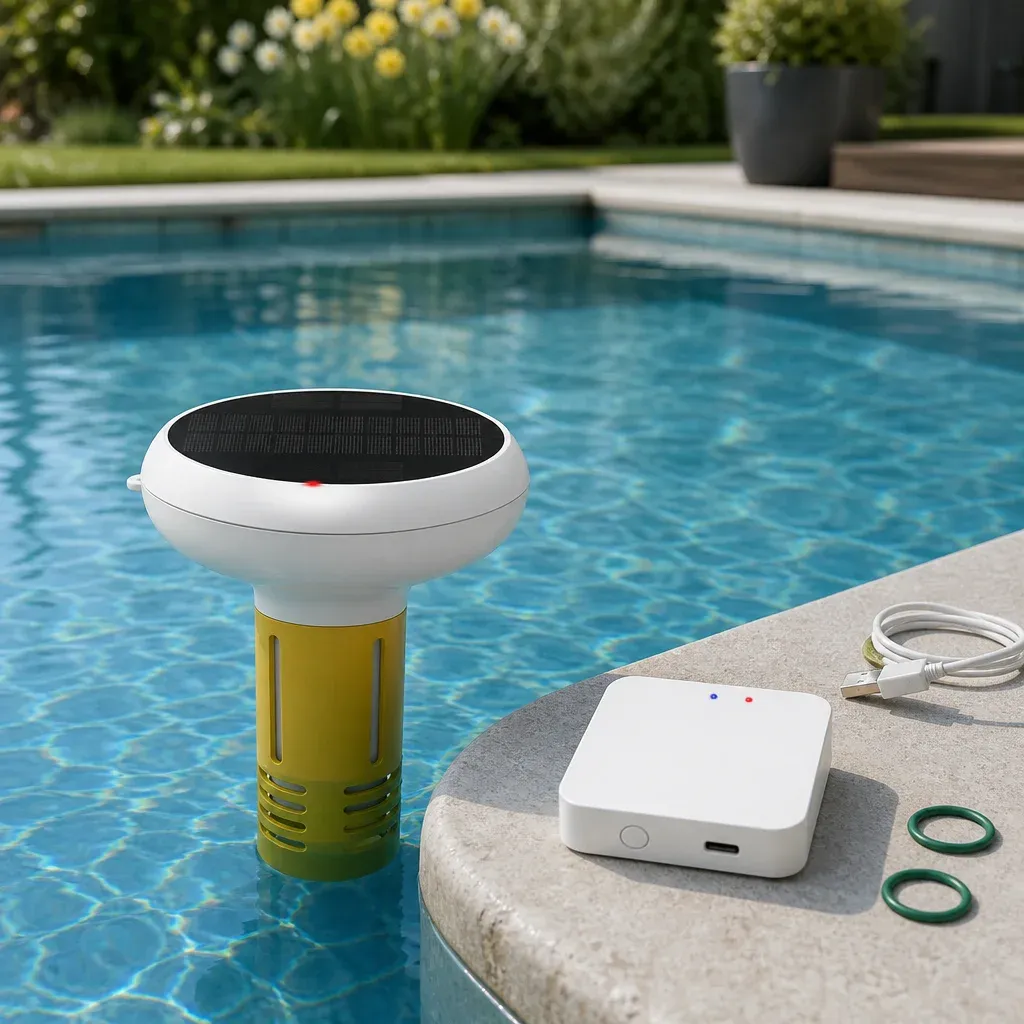
TL;DR: A pH water quality monitor is a digital device that continuously measures the acidity or alkalinity of water in real-time. By eliminating subjective colour-matching test strips, these smart monitors provide precise data directly to your smartphone. Based on our testing at FoundPage, they are essential for safely managing swimming pools, hot tubs, and hydroponic systems, especially in hard water areas across the UK.
Key Takeaways
- A digital pH water quality monitor replaces subjective colour-matching test strips with precise, real-time data, eliminating the need for messy liquid reagents.
- UK hard water heavily influences pH stability; consequently, continuous monitoring is essential to prevent scaling in pools and nutrient lockout in hydroponics.
- Modern systems utilise a dedicated WiFi gateway, allowing for continuous 24/7 remote monitoring directly to your smartphone.
- Maintaining a precise pH balance (typically 7.0–7.2 for pools) is critical for sanitation efficacy, preventing skin irritation, and protecting expensive equipment from corrosion.
If you are wondering how to maintain perfect water chemistry, a pH water quality monitor is the definitive solution. Essentially, it is an electronic device that tracks hydrogen-ion activity to give you an exact acidity or alkalinity reading without relying on messy liquid reagents. Managing water chemistry manually often involves wet hands, squinting at printed colour charts, and handling potentially hazardous chemicals. For domestic pool owners, hot tub enthusiasts, and hydroponic growers across the UK, relying on visual interpretation leaves far too much room for error. Consequently, upgrading to a dedicated digital monitor removes the guesswork entirely.
Whether you are managing a backyard swimming pool in Cornwall or operating a commercial tomato greenhouse in the Home Counties, understanding the exact acidity or alkalinity of your water is a non-negotiable aspect of system maintenance. Furthermore, relying on outdated manual testing methods often results in delayed reactions to chemical imbalances, leading to cloudy water, damaged equipment, or failed crops.
What is a digital pH water quality monitor?
A digital pH water quality monitor is an electronic device designed to measure the hydrogen-ion activity in water, providing a highly accurate reading of its acidity or alkalinity on a scale of 0 to 14. Unlike traditional litmus paper or liquid dropper kits (such as phenol red), which require manual water sampling and visual colour comparison, a digital monitor utilises sophisticated sensor probes submerged directly into the water.
Specifically, the core technology relies on a glass electrode and a reference electrode. When the glass bulb comes into contact with the water, it generates a tiny micro-voltage based on the concentration of hydrogen ions. Subsequently, the monitor's internal processor translates this voltage into a readable pH value. Based on our extensive testing at FoundPage, the most advanced systems on the market today have evolved from simple handheld pens into continuous monitoring stations that transmit data via a dedicated WiFi gateway.
This shift from manual sampling to continuous tracking is highly significant. With traditional methods, you only know the water quality at the exact moment you perform the test. In contrast, a continuous monitor tracks fluctuations throughout the day and night, capturing exactly how environmental factors, bather load, or nutrient dosing impact the water chemistry in real time.
Why do I need to monitor my water pH in the UK?
Water quality in the United Kingdom presents unique challenges, primarily due to regional geology. According to the UK Drinking Water Inspectorate (DWI), while mains tap water must legally fall between a pH of 6.5 and 9.5, the actual mineral content varies drastically depending on your location. For instance, the South East and East Anglia are notorious for extremely hard water, which is rich in calcium carbonate and magnesium.
As a result, this high mineral content acts as a pH buffer, meaning the water strongly resists changes to its pH level. When trying to lower the pH of a pool filled with hard UK mains water, you often have to add significantly more acid than anticipated. Conversely, if the pH spikes, the calcium precipitates out of the water, forming stubborn limescale on heating elements, pump impellers, and pipework.
To successfully navigate these regional complexities, continuous data is vital. If you are setting up a new monitoring system, reading a comprehensive guide to pool pH meters in the UK can help you understand exactly how local water hardness will dictate your chemical dosing schedule.
How does a continuous pH water quality monitor work?
The primary advantage of upgrading to a smart pH water quality monitor is the transition from reactive maintenance to proactive management. Traditional liquid reagent testing requires you to physically visit the water source, collect a sample, add drops, shake the vial, and interpret the results. Unfortunately, this process is messy, time-consuming, and prone to human error—especially in poor lighting conditions.
According to our technical reviews of current market models, modern digital monitors operate on a completely different paradigm:
- Continuous Submersion: The industrial-grade probes remain permanently submerged in the water flow (often installed in the plumbing manifold or floated in the main body of water).
- Real-Time Data Transmission: Readings are taken multiple times per minute and sent through a dedicated WiFi gateway to a secure cloud server.
- Automated Alerts: Therefore, if the pH drifts outside your pre-set parameters, the system instantly pushes a notification to your smartphone, allowing you to intervene before a minor drift becomes a major problem.
By eliminating the need for messy liquid reagents, you drastically reduce the ongoing cost of testing supplies and avoid the handling of potentially toxic indicator chemicals. For a deeper look into how these systems integrate into your home network, explore our breakdown of the modern smart water quality tester.
What are pH water quality monitors used for?
How do pH monitors help swimming pools and hot tubs?
According to guidelines from the Pool Water Treatment Advisory Group (PWTAG)—the leading independent guidance body for UK swimming pools—it is strongly advised to maintain pool water pH between 7.0 and 7.2. The relationship between pH and chlorine efficacy is absolute. For example, at a pH of 7.0, chlorine is approximately 75% effective at destroying bacteria. However, if the pH is allowed to drift up to 8.0—a common occurrence without continuous monitoring—chlorine efficacy plummets to just 20%.
Operating a pool with high pH not only wastes expensive chlorine but also creates a hazardous environment. Indeed, the NHS frequently cites poorly balanced pool water as a primary trigger for contact dermatitis and eye irritation among swimmers. Ultimately, utilising a reliable pool water tester ensures your sanitation chemicals remain active, keeping the water safe and crystal clear.
Why is pH monitoring important for hydroponics?
Beyond recreational water, pH monitoring is the absolute backbone of the UK's growing hydroponics sector. Plants grown in soil-less mediums rely entirely on the grower to provide bio-available nutrients in the water supply. The catch is that nutrients only remain soluble—and therefore available to the plant roots—within a very narrow pH window, typically between 5.5 and 6.5.
If the pH drops too low, macronutrients like phosphorus become locked out, and heavy metals can become toxic. On the other hand, if the pH rises too high, essential micronutrients like iron and manganese precipitate out of the solution, leading to severe nutrient lockout, stunted growth, and ultimately, failed crops. Continuous monitoring prevents these disastrous fluctuations, ensuring optimal yields.
Ready to automate your pool care with FoundPage?
Upgrade Your Pool — £128.00