Smart Water Quality Tester Explained: A UK Buyer's Guide
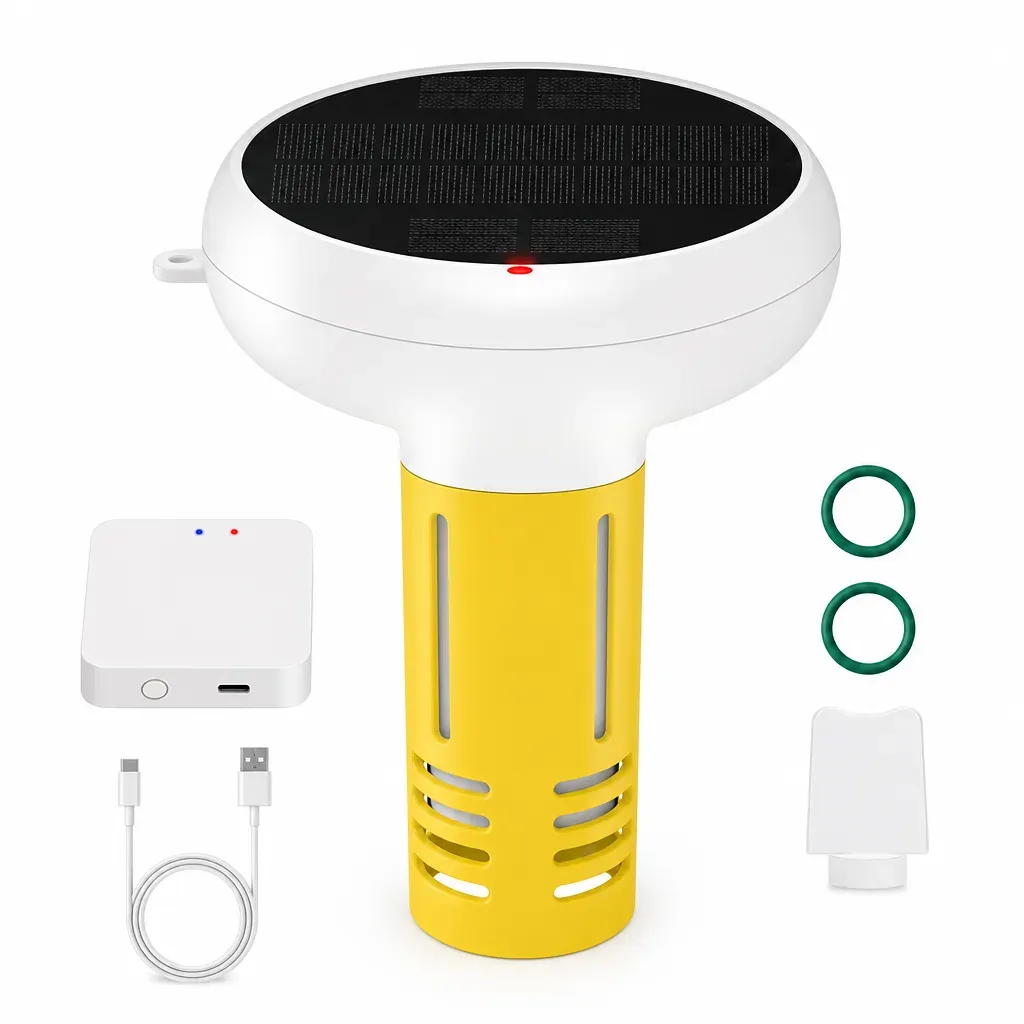
TL;DR: A smart water quality tester is a digital monitoring device that automatically tracks your pool or hot tub's chemical balance (such as pH and ORP). By transmitting real-time data to your smartphone via WiFi, it completely eliminates the need for manual test strips and ensures your water remains safe and compliant with UK hygiene standards.
If you are wondering what a smart water quality tester is, it is an advanced digital device that continuously measures your pool or spa's chemistry and delivers real-time alerts directly to your smartphone. Historically, managing pool or hot tub water chemistry has involved squinting at colour-changing paper strips or handling finicky liquid reagents. However, for UK pool owners and facility managers, ensuring safe water means adhering to strict hygiene standards, yet manual testing leaves significant room for human error. Consequently, the most reliable solution lies in modernising the approach with a smart water quality tester.
Based on our extensive testing at FoundPage, a smart tester removes the guesswork from daily maintenance. By providing continuous, real-time data directly to a smartphone, these devices represent a fundamental shift in how we monitor water safety. Furthermore, this guide explores how digital monitoring works, why it is essential for UK compliance and safety, and what specific features to look for when upgrading your setup.
Key Takeaways
- A smart water quality tester provides continuous 24/7 remote monitoring, eliminating the need for daily manual checks.
- Modern digital meters bypass the need for messy liquid reagents and inaccurate test strips.
- Connecting via a dedicated WiFi gateway allows you to track pH, ORP, and temperature levels from anywhere.
- Upgrading to digital monitoring helps maintain compliance with UK Health and Safety Executive (HSE) guidelines for pool and spa water.
Why Should You Switch to a Smart Water Quality Tester?
Traditional water testing methods are inherently flawed. For instance, test strips degrade when exposed to moisture, and their colour-coded results are highly subjective. In contrast, liquid reagent kits offer better accuracy but require meticulous handling, careful drop counting, and safe chemical storage. When managing a pool in the UK—where fluctuating weather can rapidly alter water chemistry—relying on intermittent manual checks often results in reactive rather than proactive maintenance.
According to data from the UK's Pool Water Treatment Advisory Group (PWTAG), maintaining consistent pH levels (ideally between 7.0 and 7.6) is critical for chlorine efficacy. Fortunately, a smart water quality tester automates this tracking. Rather than taking a snapshot of your water's health once a week, these devices provide a continuous data stream. For a comprehensive overview of how digital pH tracking transforms maintenance, read our ultimate guide to pool pH meters in the UK.
What Features Make the Best Smart Water Quality Tester?
Not all digital monitors are created equal. In our experience evaluating water systems, when investing in a smart water quality tester, specific technical capabilities dictate how useful the device will be in a real-world setting.
How Does Continuous 24/7 Remote Monitoring Work?
The primary advantage of a smart system is total visibility. High-end models utilise floating sensors or inline probes to constantly read the water's chemical makeup. As a result, this continuous 24/7 remote monitoring means you receive immediate alerts if pH spikes or sanitiser levels drop, allowing you to adjust dosing before an algae bloom occurs or the water becomes unsafe.
Why is a Dedicated WiFi Gateway Important?
Bluetooth-only devices require you to be standing next to the pool to download data. Conversely, a true smart water quality tester uses a dedicated WiFi gateway. This bridge seamlessly connects the sensor to your home router, pushing data to the cloud. Therefore, whether you are at work, inside the house, or on holiday, you can access your pool's metrics via a smartphone app. If you are exploring different connectivity options, our pool water tester buyer's guide breaks down the differences between Bluetooth, WiFi, and cellular models.
Can You Really Test Water Without Messy Liquid Reagents?
Yes. Digital sensors measure the electrical potential of the water to determine pH and ORP (Oxidation-Reduction Potential). Consequently, this completely removes the need for chemical drops or tablets. Ditching the test strips and ensuring no messy liquid reagents are required not only saves valuable time but also reduces long-term running costs and minimises your exposure to harsh testing chemicals.
Why Do UK Hot Tub and Pool Owners Need Digital Testing?
The UK presents unique challenges for water maintenance. Notably, over 60% of the UK is classified as having hard water, particularly in London and the South East. High calcium hardness directly impacts pH stability and scaling. Accordingly, a pH water quality monitor helps you track the precise moment your water drifts out of balance due to mineral buildup or heavy rainfall.
Furthermore, if you let out a holiday property with a hot tub, according to UK Health and Safety Executive (HSE) guidelines (HSG282), you are legally bound by strict water quality management rules to prevent Legionella. A smart water quality tester provides a reliable digital log of your water readings, offering crucial peace of mind and verifiable proof that the water has been maintained safely and consistently.
Frequently Asked Questions
How accurate is a smart water quality tester compared to liquid kits?
Based on our testing, when properly calibrated, a high-quality smart water quality tester is significantly more accurate than standard liquid kits. Crucially, it removes human error and subjective colour matching, providing exact, reliable numerical values for pH and ORP.
How often do you need to calibrate a smart water quality tester?
All digital probes require periodic calibration using standard buffer solutions (typically pH 4.0 and 7.0) to ensure ongoing accuracy. Depending on the model and usage, this is usually required once a month or at the start of the pool season. For detailed calibration steps, refer back to our comprehensive pH meter guide.
Will a smart water quality tester connect to WiFi at the bottom of the garden?
This primarily depends on your router's range. However, systems with a dedicated WiFi gateway are specifically designed to bridge the gap. You place the gateway indoors near the garden, which communicates with the pool sensor via long-range radio frequencies, and then seamlessly connects to your home WiFi.
Ditch the Test Strips Today
Ready to upgrade your pool maintenance? Experience the convenience of continuous 24/7 remote monitoring with our dedicated WiFi gateway systems. No messy liquid reagents required—just precise, real-time data delivered straight to your phone.
Ready to automate your pool care with FoundPage?
Upgrade Your Pool — £128.00